Pain, strength, skin: KLOW peptide research
Pain scores, tendon strength and skin coverage describe different achievements. Which achievement has a repair claim borrowed?
Patients in the knee report
The retrospective knee-pain report followed 16 people after injections into the knee joint. Overall, 87.5% reported relief. The groups were small: 11 of 12 improved with BPC-157 alone, and 3 of 4 improved with BPC-157 plus thymosin beta-4.
I resist picking a winner from those rows. This was a look back at treated patients, without an untreated group, and it leaves the cause of relief uncertain. Even the combined treatment involved different contents from KLOW peptide: it did not test the four-peptide blend.
The authors' call for controlled, MRI-documented studies addresses the question the results leave behind. Pain relief is valuable in its own right; credit for tissue repair needs evidence about the tissue.
Cut Achilles tendons in rats
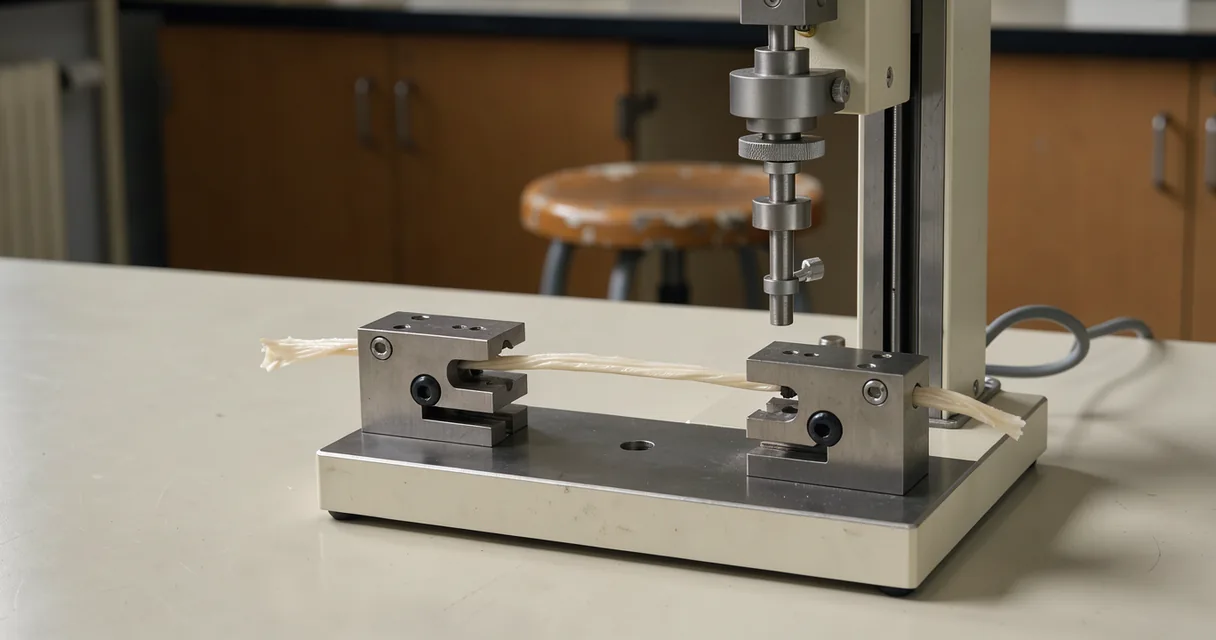
In the rat Achilles study, BPC-157 accelerated healing after the tendon was fully cut. The investigators assessed biomechanical recovery, function and microscopic structure; they also observed tendon-cell outgrowth in culture. Better collagen organisation accompanied the recovery.
Here there is more to discuss than a report of comfort. Tendon strength and function were examined directly in an animal injury model. That direct measurement makes the rat result interesting to me, although it still leaves the transfer to human injuries unresolved.
The study concerns BPC-157. Giving the four-ingredient blend credit for its results would require a further experiment with that blend.
Rat skin coverage and contraction
The thymosin beta-4 wound experiment measured new skin covering full-thickness wounds in rats. Coverage increased 42% after 4 days and up to 61% after 7 days compared with saline. Wound contraction increased at least 11% by day 7, with increased collagen deposition and blood-vessel formation.
A related cell assay found increased keratinocyte migration: skin cells moved more readily. The different measurements describe different parts of repair, and I prefer having them named to having them compressed into the word healing.
The substance tested was full-length thymosin beta-4. TB-500 is a shorter fragment. The paper therefore gives the native protein a result that remains to be demonstrated for the fragment and the complete KLOW mixture.
Skin collagen in women
A 2015 review of GHK and skin regeneration reports increased collagen production in 70% of women treated with topical GHK-Cu, compared with 50% using vitamin C and 40% using retinoic acid. The review also covers skin firmness, clarity, fine lines and wrinkle depth.
Those are topical findings. I hesitate to carry credit from a topical preparation to a systemic blend. The route and the material being tested affect the question the study answers. A skin result cannot supply the missing outcome from a KLOW injection study.
This is an interesting ingredient history on its own terms. It becomes much less convincing when every result is gathered into a general promise of recovery.
Bladder symptoms and an early safety pilot
The BPC-157 bladder-pain pilot reported complete symptom resolution in 10 of 12 patients. All scored improvement 5 of 5 on the reported assessment, and no adverse events were reported. The study lacked an untreated comparison.
A separate 2025 intravenous safety pilot involved two healthy adults. It reported no observed adverse events and no measurable changes in cardiac, liver, kidney, thyroid or glucose biomarkers. The study was about early safety observations, with a population far too small to settle general safety.
To me, these papers are reasons to conduct better human studies. Neither assigns benefit or safety to the complete four-peptide formulation. The side effects discussion covers the unanswered risks, and the reference list preserves the source details.